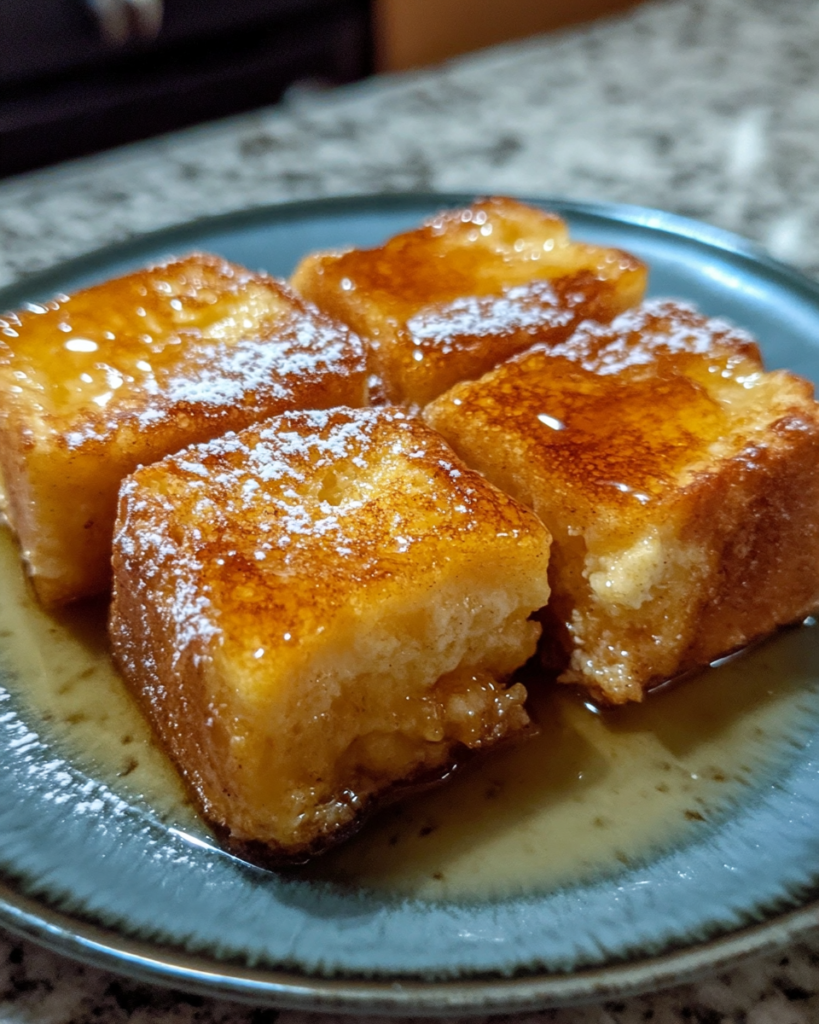
Overnight French Toast Casserole is the kind of breakfast that transforms an ordinary morning into something warm and inviting. Thick cubes of bread soak slowly in a rich custard, absorbing cream, eggs, and gentle sweetness while resting in the refrigerator. By the next day, the flavors have settled into every bite, ready to bake into a golden, tender dish with crisp edges and a soft center.
What makes Overnight French Toast Casserole so appealing is its balance of texture. The top develops a lightly caramelized crust, while the interior remains custardy and delicate. Hints of vanilla and cinnamon drift through the kitchen as it bakes, filling the space with comforting aromas.
It is ideal for relaxed weekends, holiday mornings, or any time you want a prepared-ahead breakfast that feels thoughtful yet simple. Slice it into generous squares and serve warm for a meal that feels both homey and special.
Ingredients Overview
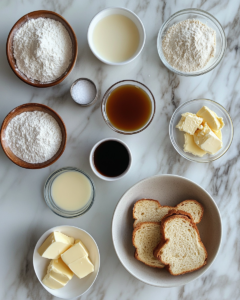
The bread is the backbone of Overnight French Toast Casserole. Use a sturdy loaf such as brioche, challah, or French bread. Slightly stale bread works best because it absorbs the custard without turning mushy. Cut into 1-inch cubes for even soaking.
Eggs create the custard structure. They bind the casserole together and provide richness. Whole milk forms the base of the soaking mixture, while a small amount of heavy cream adds depth and a smoother texture. If preferred, you may substitute half-and-half for a similar result.
Granulated sugar sweetens the custard gently without overpowering the dish. Brown sugar can be added for a deeper caramel note. Pure vanilla extract gives warmth, and ground cinnamon contributes subtle spice.
A pinch of salt balances sweetness and highlights flavor. Butter is used to grease the baking dish and can be dotted on top before baking to encourage a lightly crisp surface.
For substitutions, whole wheat bread can be used for a heartier texture. Dairy-free milk alternatives such as almond or oat milk are suitable, though the final texture may be slightly lighter. Maple syrup may replace part of the sugar for natural sweetness.
Step-by-Step Instructions
Begin by greasing a 9×13-inch baking dish with softened butter. Arrange the cubed bread evenly in the dish, spreading it out so there are no large gaps. The bread should fill the dish comfortably without being tightly packed.
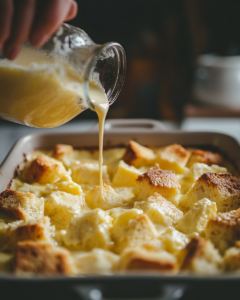
In a large mixing bowl, whisk together the eggs until smooth. Add the milk, heavy cream, sugar, vanilla extract, cinnamon, and salt. Whisk thoroughly to create a uniform custard mixture.
Slowly pour the custard over the bread cubes, making sure all pieces are moistened. Press the bread gently with a spatula to help it absorb the liquid. Cover the dish tightly with plastic wrap or foil.
Refrigerate for at least 6 hours, preferably overnight. During this time, the bread absorbs the custard fully, resulting in a consistent texture throughout.
When ready to bake, remove the casserole from the refrigerator and let it sit at room temperature for about 20 minutes. Preheat the oven to 350°F.
If desired, sprinkle a small amount of brown sugar over the top for added caramelization. Bake uncovered for 45 to 50 minutes. The top should appear golden and lightly crisp, and the center should be set but still tender.
To test for doneness, insert a knife into the center. It should come out mostly clean without liquid custard. Allow the casserole to rest for 10 minutes before slicing. Resting helps it firm up slightly for clean servings.
Avoid overbaking, as this can dry out the interior. If the top browns too quickly, loosely tent with foil during the final minutes.
Tips, Variations & Substitutions
For added texture, stir chopped pecans or sliced almonds into the bread before adding the custard. Fresh berries or thin apple slices can be layered between bread cubes for a fruit-filled variation.
To create a streusel topping, combine flour, brown sugar, cinnamon, and cold butter, then sprinkle over the casserole before baking. This adds a crumbly finish with extra contrast.
If you prefer a lighter sweetness, reduce the sugar slightly and serve with warm maple syrup on the side. For a dairy-free version, use plant-based milk and coconut cream in place of heavy cream.
Day-old croissants create a richer, softer interior, while rustic sourdough provides more structure and a subtle tang.
Serving Ideas & Occasions
Overnight French Toast Casserole is well suited for holiday breakfasts, brunch gatherings, or relaxed family mornings. It pairs beautifully with fresh fruit, yogurt, or crisp bacon for contrast.
Serve each slice warm with a dusting of powdered sugar and a drizzle of maple syrup. A spoonful of whipped cream or a side of sliced strawberries adds brightness.
For beverages, offer freshly brewed coffee, tea, or fresh orange juice. Because the casserole is baked in one dish, it makes serving simple and convenient when hosting guests.
Nutritional & Health Notes
This casserole provides protein from eggs and carbohydrates from bread, offering a satisfying start to the day. Using whole milk and cream adds richness, but lower-fat milk may be substituted if desired.
Portion size plays an important role in keeping the dish balanced. Pairing it with fruit adds fiber and freshness to the meal.
If using whole grain bread, you increase fiber content and create a more filling breakfast. Adjusting sugar levels allows you to tailor sweetness to your preference while maintaining structure.
While indulgent in texture, this recipe can fit into a balanced diet when enjoyed thoughtfully and paired with nutrient-rich sides.
FAQs
Can I prepare Overnight French Toast Casserole more than one day ahead?
Yes, you can assemble the casserole up to 24 hours in advance. Keep it tightly covered in the refrigerator until ready to bake. The extended soak deepens flavor and improves texture, but avoid exceeding 24 hours, as the bread may become overly soft. If preparing far ahead, wait to add any streusel topping until just before baking so it remains crisp. Always let the dish rest at room temperature briefly before placing it in the oven.
What type of bread works best for this recipe?
Sturdy, enriched breads such as brioche, challah, or French bread produce the most tender texture. These breads absorb custard well while maintaining structure. Slightly stale bread is ideal because it soaks up liquid more effectively than fresh bread. Avoid very soft sandwich bread, as it can break down and become dense. Rustic sourdough is another suitable option if you prefer a slightly firmer bite.
How do I prevent the casserole from becoming soggy?
Use day-old bread and measure the custard carefully. The bread should be moist but not swimming in liquid. Press the bread lightly to help absorption, but avoid compressing it too firmly. Proper baking time is also important. Bake until the center is set and no liquid remains. Allowing the casserole to rest after baking helps excess moisture settle, resulting in cleaner slices and improved texture.
Can I freeze Overnight French Toast Casserole?
Yes, you can freeze it either before or after baking. If freezing before baking, wrap the dish tightly and freeze for up to one month. Thaw overnight in the refrigerator before baking as directed. If freezing after baking, allow it to cool completely, slice into portions, and store in airtight containers. Reheat gently in the oven to maintain texture. Avoid microwaving for long periods, as it may soften the top excessively.
How can I make this recipe less sweet?
Reduce the sugar in the custard mixture by a few tablespoons without affecting structure. You can also skip any added topping and rely on fresh fruit for natural sweetness. Serving maple syrup on the side instead of mixing it into the custard gives you better control over sweetness per serving. Cinnamon and vanilla will still provide warmth and depth even with less sugar.
Why does the center sometimes seem undercooked?
If the center appears too soft, it may need additional baking time. Ovens can vary in temperature, so check for doneness by inserting a knife into the middle. If liquid custard remains, continue baking in 5-minute increments. Allowing the casserole to rest after baking is also essential, as it firms up while cooling slightly. Avoid cutting immediately out of the oven.
Can I add fruit directly into the casserole?
Yes, fruit can be layered between bread cubes before adding the custard. Berries, diced apples, or sliced bananas work well. Be mindful that juicy fruits release moisture as they bake, which may slightly soften the texture. If using frozen fruit, thaw and drain excess liquid first. Distribute fruit evenly to maintain consistent flavor in each slice.
Print
Overnight French Toast Casserole is a baked breakfast dish made with cubed bread soaked in a sweet vanilla custard and chilled overnight before baking to golden perfection.
- Prep Time: 10 minutes
- Cook Time: 20 minutes
- Total Time: 30 minutes
- Yield: 4 servings 1x
Ingredients
1 loaf brioche or French bread, cut into 1-inch cubes (about 10 cups)
8 large eggs
2 cups whole milk
1/2 cup heavy cream
1/2 cup granulated sugar
1/4 cup brown sugar
1 tablespoon pure vanilla extract
1 teaspoon ground cinnamon
1/4 teaspoon salt
2 tablespoons butter, for greasing dish
Instructions
-
Grease a 9×13-inch baking dish with butter.
-
Spread cubed bread evenly in the dish.
-
In a bowl, whisk eggs, milk, cream, sugars, vanilla, cinnamon, and salt.
-
Pour custard evenly over bread and press gently to absorb.
-
Cover and refrigerate at least 6 hours or overnight.
-
Remove from refrigerator and let stand 20 minutes while oven preheats to 350°F.
-
Bake uncovered for 45 to 50 minutes until golden and set.
-
Rest 10 minutes before slicing and serving.